Time is the perception of becoming, as well as the color is the perception of the wavelength of visible spectrum (light). Both are objective, but differ in that the color is particular and the time is abstract. A certain amount of time "t" is the product of an objective abstraction. The becoming-time duality is analogous to the wavelength-color duality (light). We already know that the first one is called duration.
The interpretation of the colors and their relation to emotions are subjective. Emotions can also affect time. Time seems to pass faster when we are happy or distracted than when we are sad or waiting for something.
When we think about an hour, we do not remember everything that it happened in that period, but we abstract the distance or interval between the beginning and the end of the hour. Time is an abstract but objective distance; the space is concrete. With age it makes easier to us to abstract longer time periods each time.
Monday, September 8, 2014

Sunday, August 10, 2014
THE TIME SYMBOL
When we talk about activity in Philochrony we refer to the CAOP (continuous activity with orderly pace).
The CAOP is inherent to time.

The CAOP is inherent to time.
When we see this symbol we must remember that in a time interval there is no distance or space, but activity.
NOTES:
- The apex of the A points to 12:00.
- The opposite ends to the apex point at 5:00 and 7:00 respectively.
- The center line marks 9:16.
NOTES:
- The apex of the A points to 12:00.
- The opposite ends to the apex point at 5:00 and 7:00 respectively.
- The center line marks 9:16.
THE INTERVAL IN THE PHILOCHRONY
An interval is the distance between two points in space or time. The definition given by dictionaries about interval is incorrect, because in the time there can be no space or distance, but continuous activity (CA) with orderly pace (OP). This is the CAOP. In a time interval there is activity, no space. The space alone is motionless. The CAOP is manifested in all phenomena: physical, chemical, biological, meteorological, etc. The measure of time (duration) does not measure distance, measures the CAOP.
Examples of CAOP are astronomical cycles:
- The succession of day and night.
- The succession of the seasons in the year.
- The phases of the Moon.
Conventionally, we have the succession of days and months (names).
In all processes we find the CAOP. This is an universal principle. This explanation is to establish the difference between the intervals of space and time. In the space bodies move from one place to another and in the time beings pass from one moment to another.
Examples of CAOP are astronomical cycles:
- The succession of day and night.
- The succession of the seasons in the year.
- The phases of the Moon.
Conventionally, we have the succession of days and months (names).
In all processes we find the CAOP. This is an universal principle. This explanation is to establish the difference between the intervals of space and time. In the space bodies move from one place to another and in the time beings pass from one moment to another.
THE SIGNS OF SPACE AND TIME
Peircean Philochrony (Charles S. Peirce)
Types of images or signs: icons, indexes and symbols
- The icon is similar to the object.
- The index is directly related to the object.
- The symbol is given by a law or convention.
- All words are symbols.
SPACE
The space (icon)


Types of images or signs: icons, indexes and symbols
- The icon is similar to the object.
- The index is directly related to the object.
- The symbol is given by a law or convention.
- All words are symbols.
SPACE
The space (icon)
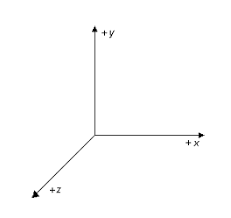
Coordinate axis (index)
Dimensions (Index)
----------------------------> Direction and sense.
TIME
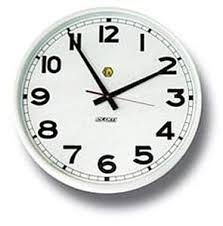
The Clock (icon and index)
----------------------------> Direction and sense.
TIME
The Clock (icon and index)
Calendar (Index)
The law of the senses (index)
........ B-A
b----------------->p<----------------
........ past .... becoming ... future
Note that an arrow in the space indicates direction and sense, but in the time indicates only sense.
........ B-A
b----------------->p<----------------
........ past .... becoming ... future
Note that an arrow in the space indicates direction and sense, but in the time indicates only sense.
LAW OF THE SENSES (--><--)
According to the mathematical law of the senses time flows from the future to the present or becoming of moments (<----), but events are presented to us in a direction from the past to the present or to the future (---->). When we think about an event that happened we project to the past and when we think about an event will happen after now we project to the future.
......... B-A
b----------------->p<----------------
........ past .... becoming ... future
b is beginning, p is present, B is before and A is after. Present is a flowing and dimensionless point that the subject projects to the past or to the future. The becoming is the present. The whole scheme integrates the becoming-time.
......... B-A
b----------------->p<----------------
........ past .... becoming ... future
b is beginning, p is present, B is before and A is after. Present is a flowing and dimensionless point that the subject projects to the past or to the future. The becoming is the present. The whole scheme integrates the becoming-time.
Friday, June 13, 2014
MENTAL MAP OF TIME
The branch of the clocks corresponds to the field of the Physics. The branch of the calendar corresponds to the Astronomy. The branch of the concepts corresponds to the Philosophy. And the branch of theories corresponds to the Philochrony.

THE MODULATION OF MATHEMATICAL TIME
In the temporal modulation the becoming modulates the mathematical time. The continuous succession of unrepeatable moments is modulated by the occurrence of events that make becoming. The becoming does not affect the duration of the intervals. An hour lasts the same for a person working and for other person that is relaxed on a bed. The becoming gives shape and substance to the mathematical time. Destiny is the people's becoming. Monotony is an unmodulated time without becoming, for example, the operation of the clocks.
METAPHOR OF THE WAVE MODULATION
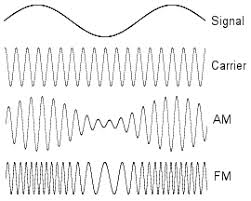
METAPHOR OF THE WAVE MODULATION
The carrier wave is the time and the signal is the becoming.
Subscribe to:
Posts (Atom)